
ACCREDITED LABORATORY TESTS FOR AIRBORNE SOUND INSULATION
Tested Building Elements:
- Partition walls
- External walls
- Movable walls, balcony glazing, sliding doors
- Doors and windows
- Ventilation openings
- Prototype structures
- Airborne sound insulation of ventilation ducts
Vertical Measurements:
- Floor structures
- Roof structures
The laboratory has four test openings (see Figure 1).
Horizontal Measurements
Two test openings are available:
- Test opening A: Height 2774 mm × Width 3611 mm (Figure 2)
- Test opening B: Height 2105 mm × Width 1216 mm (Figure 3)
In the large test opening, airborne sound insulation can be determined reliably up to 75 dB Rw, and in the small test opening to 65 dB Rw. Maximum total thickness of the structure is 640 mm.
If the tested element is significantly smaller than the test opening, the test opening must be narrowed or lowered using highly sound-insulating structures. Turku UAS performs the construction work according to agreed dimensions.
For the small test opening, three standard lowering and one standard narrowing are available to allow reliable determination up to 55–60 dB Rw:
- Test opening B, lowered by 300 mm: H1800 x W1216 mm
- Test opening B, lowered by 600 mm: H1500 x W1216 mm
- Test opening B, lowered by 900 mm: H1200 x W1216 mm
- Test opening B, narrowed by 205 mm: H2105 x W1010 mm
With standard reductions or narrowing, the maximum total thickness is 250 mm including sealing strips.
Vertical Measurements
Two test openings are available:
- Test opening C: H4100 mm x W2505 mm
- Test opening D: H4100 mm x W2507 mm
Any type of floor or roof structure can be installed in test opening C.
Test opening D has a permanent 160 mm reinforced concrete slab, mainly used for measuring impact sound insulation of floor coverings. Further information is available on this page https://akustiikka.turkuamk.fi/en/impact-sound-insulation-of-a-floor-structure/.
Both openings allow reliable airborne sound insulation determination up to 72 dB Rw. Maximum thickness of the load-bearing part of the structure is 590 mm. If a suspended ceiling attached to the load-bearing part is used, its maximum thickness is 280 mm in addition to the previous limit.
FINAS accreditation
Details of the accreditation scope are provided here: https://akustiikka.turkuamk.fi/en/accreditation/
Method
ISO 10140-2 describes the method for determining the airborne sound insulation of a building element. The element under investigation is installed in a measurement opening between two rooms. In the source room, a broadband noise signal is reproduced simultaneously through multiple loudspeakers. The sound pressure levels in the source room (1) and the receiving room (2) are measured using microphones. The result of the measurement is the airborne sound insulation of the structure over the frequency range 50–5000 Hz (see Figure 5).

Figure 1. Dimensions of test openings A–D. PDF version is available for download https://akustiikka.turkuamk.fi/app/uploads/2025/06/test-openings-a-d-120225.pdf
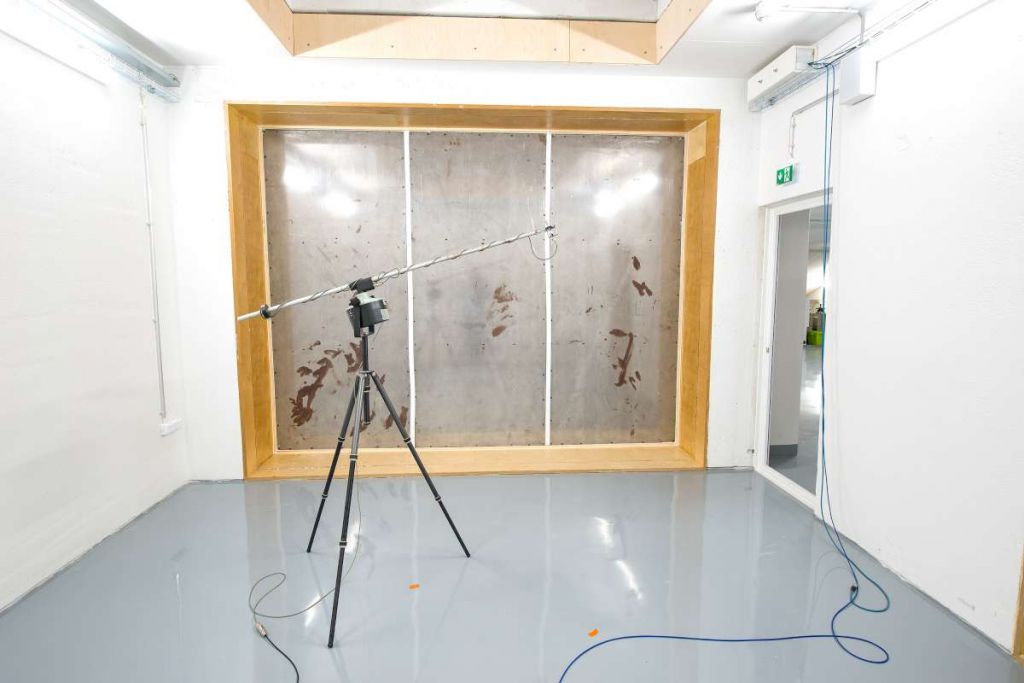
Figure 2. Large test opening A
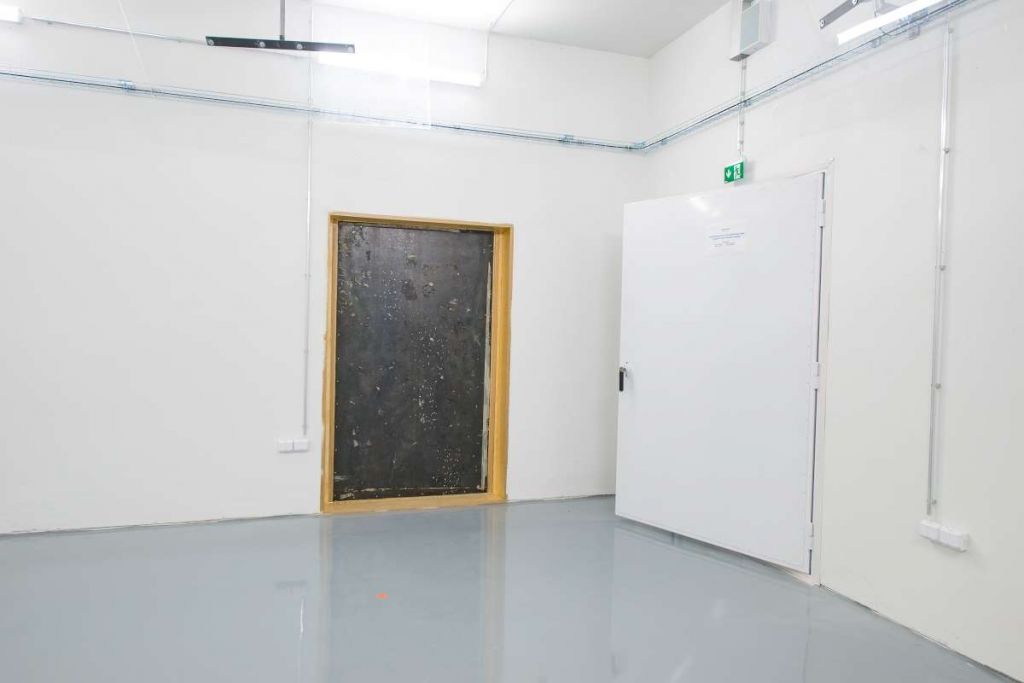
Figure 3. Test opening B
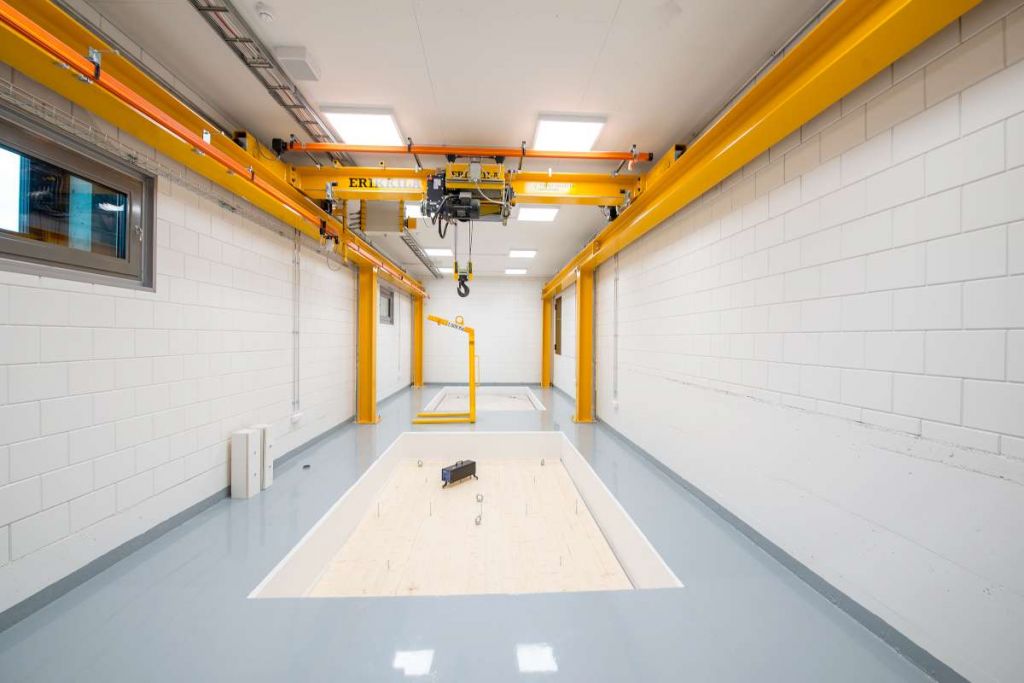
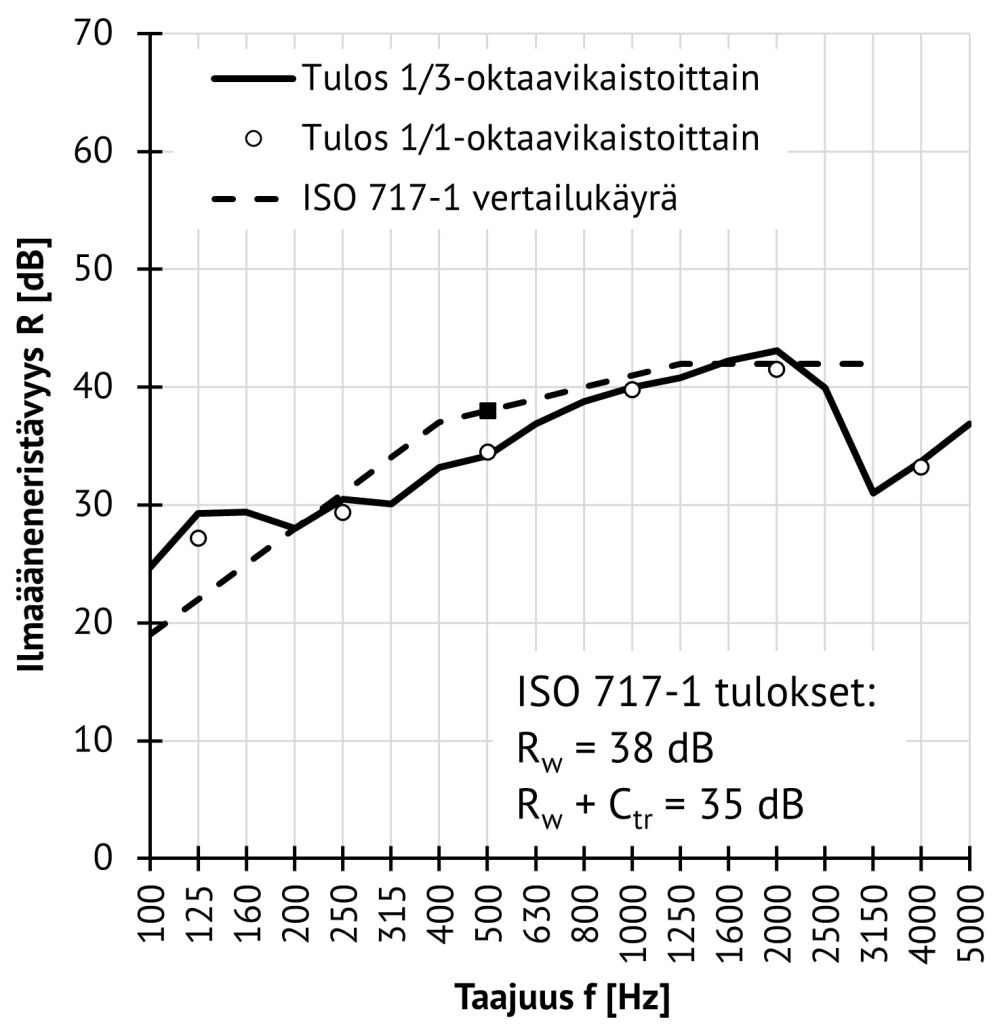
Figure 5. Example of an airborne sound insulation test result
Delivery and Location
The laboratory is located at Joukahaisenkatu 7, 20520 Turku. Instructions for deliveries can be found https://akustiikka.turkuamk.fi/en/delivery-instructions/.